How to Break in Shoes
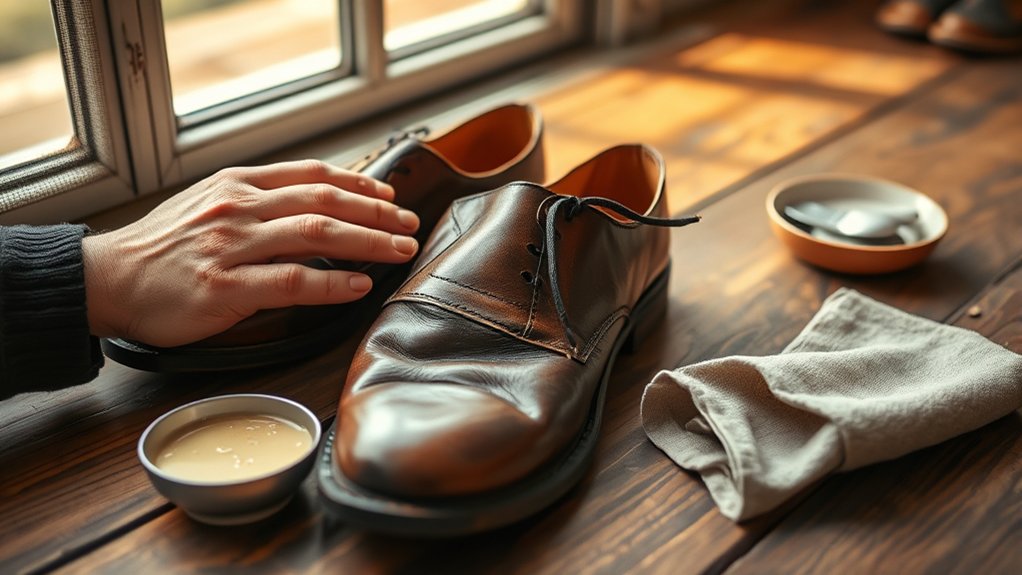
To break in your shoes quickly, start by applying leather conditioner to soften and restore flexibility, gently massaging it in. Using leather conditioner helps prepare the material for easier stretching and reduces stiffness.
Next, use a hairdryer on low heat while flexing the shoes to enhance softness, but avoid excessive heat to prevent damage. If the shoes feel tight, gradually stretch them with a shoe stretcher or wear thick socks while warming.
Protect your feet by wearing moisture-wicking socks and applying blister prevention tape. For best results, prepare your shoes properly and follow safe breaking-in tips to ensure lasting comfort. Explore these practical strategies to ease the process further.
Key Takeaways
- Apply leather conditioner and gently massage to soften shoe materials and restore flexibility.
- Wear shoes indoors for short periods daily, gradually increasing wear time to adapt feet and shoes.
- Use a shoe stretcher or thick socks with low heat to gently stretch tight areas incrementally.
- Protect feet from blisters by wearing moisture-wicking socks, applying blister prevention tape, and using foot powder.
- Avoid excessive heat or moisture to prevent damage while flexing and manipulating shoes for comfort.
How to Soften Shoes Quickly for Breaking In
Although new shoes often feel stiff and uncomfortable, you can soften them quickly by applying specific techniques that target the material without causing damage. For softening leather, start by gently massaging a leather conditioner into the surface, which restores flexibility and prevents cracking.
Warm the shoes slightly with a hairdryer on low heat while flexing them with your hands to enhance softness. Avoid excessive heat to protect the leather’s integrity. To maintain freshness during the break-in period, focus on deodoring shoes by sprinkling baking soda inside overnight or using activated charcoal inserts.
These absorb moisture and neutralize odors effectively. By combining careful softening leather methods with proper deodoring shoes practices, you ensure a more comfortable, hygienic fit rapidly without compromising the shoe’s quality or lifespan.
When and How to Stretch Shoes for Breaking In
When should you consider stretching your shoes during the break-in process? Stretch your shoes if they feel tight or cause pressure points after initial wear. Material science shows that natural materials like leather respond well to gentle stretching, while synthetic fabrics may have limited flexibility.
Avoid common breaking in myths that suggest forcing shoes excessively; overstretching can damage the structure and fit. To stretch properly, use a shoe stretcher or wear thick socks combined with a blow dryer on low heat to relax fibers, then walk briefly to shape the shoe.
Focus on specific tight areas and stretch incrementally over multiple sessions. This controlled approach respects material properties, ensuring comfort without compromising durability during breaking in.
How to Prevent Blisters While Breaking in Shoes
Stretching your shoes carefully helps create a better fit, but even then, your feet might still experience friction during the break-in period. To ensure blister prevention and maintain break-in comfort, you need to take proactive steps. Start by protecting vulnerable areas on your feet and minimizing irritation as you adjust to new shoes.
Consider these effective strategies:
- Wear moisture-wicking socks to reduce dampness and friction.
- Apply blister prevention tape or moleskin on hotspots.
- Use foot powder to keep feet dry and reduce rubbing.
- Gradually increase wear time to allow your feet to adapt.
- Keep your feet clean and moisturized to avoid skin breakdown.
Preparing Your Shoes for a Comfortable Break-In
How can you guarantee your shoes feel comfortable from the very first wear? Proper preparation is key. Begin by understanding the material science behind your shoes; different materials react uniquely to moisture, heat, and pressure.
For example, leather benefits from conditioning, which softens fibers, while synthetic fabrics may require minimal treatment. Use appropriate shoe care products to condition and protect the material, enhancing flexibility without compromising durability.
Next, gently manipulate the shoe’s shape by flexing and bending it with your hands to reduce stiffness. Pay attention to the insole and lining. Adding cushioned inserts can improve comfort during the break-in phase.
Tips to Speed Up the Breaking-In Process Safely
Why wait weeks to enjoy fully comfortable shoes? You can speed up the breaking-in process safely by focusing on methods that promote softening leathers and flexing fabrics without causing damage. Start by wearing your shoes for short periods indoors to allow gradual adjustment.
Use a leather conditioner or dedicated softening agents to make the material more pliable. Gently flex the shoes with your hands to loosen stiff areas, paying close attention to the fabric sections. Finally, consider using a shoe stretcher to target tight spots safely.
- Wear shoes indoors for 1-2 hours daily
- Apply leather conditioner for softening leathers
- Flex fabrics manually to enhance flexibility
- Use a shoe stretcher for tight areas
- Avoid excessive heat or moisture to prevent damage
These steps ensure quicker, safer comfort.
Frequently Asked Questions
Can Breaking in Shoes Improve Their Arch Support?
Breaking in shoes can improve their comfortable fit but won’t substantially enhance arch support.
You should also maintain odor control by keeping them clean and dry, ensuring overall foot health during the break-in process.
Are Certain Shoe Materials Harder to Break in Than Others?
Think of leather stiffness as a stubborn mountain, tough to climb but rewarding once conquered.
Synthetic flexibility, like a flowing river, adapts quickly.
You’ll find leather shoes usually take longer to break in than synthetic ones.
How Long Does the Average Break-In Period Last?
The average break-in period lasts two to four weeks, depending on material and usage. During this time, you’ll address sizing adjustments and durability concerns to guarantee comfort and longevity, so be patient and consistent.
Is It Necessary to Break in All Types of Shoes?
You don’t need to break in all shoes, but following breaking in etiquette ensures better footwear fit and comfort.
Stiff leather or new boots often require it, while flexible or cushioned shoes usually feel fine right away.
Can Insoles Help With the Shoe Break-In Process?
Yes, insoles can improve insole comfort and reduce break in timing by cushioning pressure points and providing better support. They help your shoes conform to your feet faster while minimizing discomfort during the break-in period.