

When Were Shoes Invented
You’ve relied on shoes for protection and comfort for at least 40,000 years, according to fossilized footprints suggesting early footwear use. The history of shoes shows how they were initially made from animal hides and plant fibers to meet harsh environmental demands.
Archaeological evidence, like ancient leather sandals, confirms their growing sophistication. Over time, shoe designs adapted for function, culture, and status.
Exploring their development reveals how footwear shifted from mere necessity to cultural and social significance. Shoes have become more than protection—they are symbols of identity and style.
Key Takeaways
- Fossilized footprints from around 40,000 years ago suggest early humans used footwear for protection.
- Direct evidence includes leather sandals found in caves dating back approximately 10,000 years ago.
- Early shoes were made from animal hides, woven fibers, and plant-based materials.
- Footwear development aligned with environmental needs and expansion of trade routes.
- Archaeological findings show evolution from simple foot coverings to more sophisticated designs over millennia.
The Origins of Human Footwear
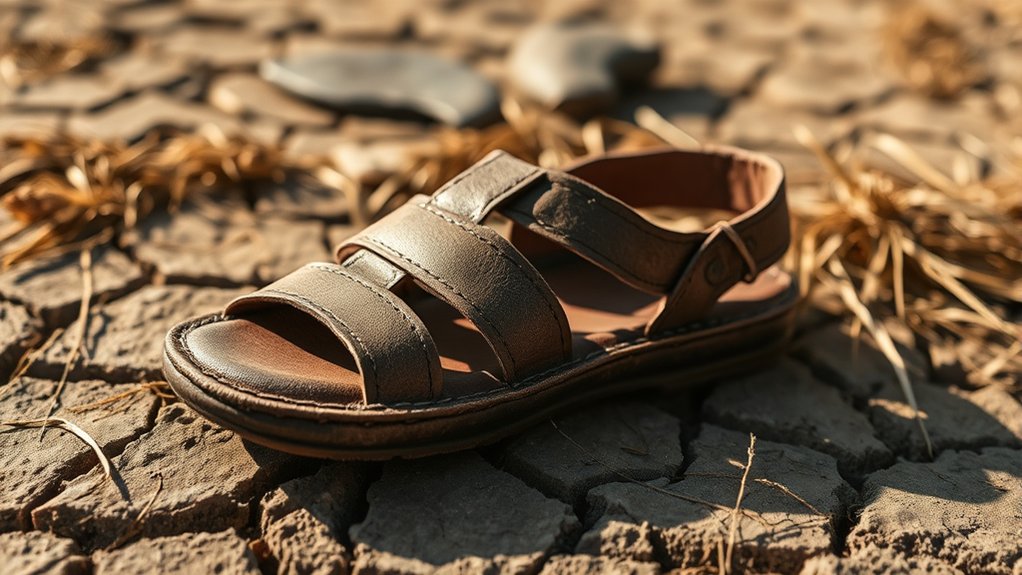
How did humans first develop footwear? You’ll find that early footwear likely emerged out of necessity to protect feet from harsh environments. Researchers use artifact dating to estimate when these items appeared, although direct evidence is sparse.
Early humans probably crafted basic foot coverings from available materials like animal hides. These innovations coincided with the expansion of trade routes, which facilitated the exchange of materials and techniques, accelerating footwear development.
You can infer that footwear evolved not only as protection but also as a cultural and practical adaptation influenced by environmental challenges and social interactions. By examining these factors objectively, you understand that human footwear origins reflect both survival needs and emerging complexity in human societies.
Archaeological Evidence of Early Footwear
Where can we find the earliest tangible proof of footwear? Archaeological sites offer critical clues through preserved remnants and indirect evidence. For example, fossilized footprints dating back approximately 40,000 years suggest humans adapted their gait possibly due to early footwear use.
Additionally, tools and materials linked to footwear scavenging, such as animal hides and plant fibers, indicate deliberate efforts to protect feet. Evidence of ancient foot care, like healed injuries consistent with protective coverings, further supports this.
Notably, leather sandals discovered in caves around 10,000 years ago provide direct proof of crafted shoes. By analyzing these findings, you can trace the evolution of footwear from rudimentary protection to more sophisticated designs, reflecting early humans’ practical responses to environmental challenges and their growing technological skills.
Making and Wearing Shoes in Ancient Times
Why did ancient people invest time and effort into making footwear? They recognized that shoes protected their feet from harsh terrain and environmental hazards.
You’d find that early shoe materials varied widely, including animal hides, woven fibers, and plant-based components, chosen for durability and availability. Crafting shoes required skillful techniques like cutting, stitching, and shaping to ensure comfort and functionality.
Moreover, as trade routes expanded, access to diverse materials improved, influencing the quality and variety of shoes you could obtain. Wearing shoes also had social and practical implications, reflecting status and adapting to climate conditions.
How Shoe Designs Evolved Over Time
When did shoes transform from simple foot coverings into intricate designs? Over time, advances in shoe materials and production techniques played a critical role.
Early designs primarily used natural materials like leather and plant fibers, limiting flexibility. As tanning and weaving methods improved, you saw more durable and comfortable shoes.
By the Middle Ages, cobblers employed stitching and molding techniques, allowing for tailored fits and decorative elements.
The Industrial Revolution introduced mechanized production, standardizing sizes and increasing output.
Synthetic materials like rubber and plastics later expanded design possibilities, enhancing waterproofing and flexibility.
Today, you benefit from advanced computer-aided design and innovative materials that optimize performance and aesthetics.
This evolution reflects a continuous refinement in both materials and techniques, driving shoe design from basic protection to functional art.
Cultural Influences on Modern Shoe Styles
You’ll notice that many modern shoe styles draw directly from traditional designs, reflecting a revival of cultural heritage.
As global fashion integrates diverse influences, footwear often carries symbolic meanings tied to specific communities. Understanding these cultural elements helps explain why certain styles gain popularity and how they communicate identity.
Traditional Designs Revival
Although modern footwear often embraces cutting-edge materials and technology, traditional shoe designs continue to influence contemporary styles considerably. When you examine this revival, you’ll notice how designers blend classic aesthetics with advancements in shoe ergonomics to enhance comfort and support.
You’ll find many brands incorporating recycled materials, respecting both cultural heritage and environmental sustainability. This fusion allows you to appreciate historical craftsmanship while benefiting from modern functionality.
Global Fashion Integration
How do diverse cultural traditions shape the shoes you wear today? Global commerce has accelerated the integration of distinct footwear styles, blending regional aesthetics into mainstream fashion.
The influence of traditional textile weaving techniques enriches modern materials and patterns, creating shoes that reflect a fusion of cultures. You’ll notice design elements borrowed from various regions, such as:
- Intricate embroidery from Southeast Asia
- Leather crafting methods rooted in European traditions
- Vibrant colors inspired by African textiles
- Minimalist forms influenced by Japanese footwear
- Use of sustainable materials reflecting indigenous practices
This cultural exchange, facilitated by international trade, allows you to access shoes that combine craftsmanship and innovation worldwide. Understanding these influences deepens your appreciation for the cultural complexity embedded in modern footwear designs.
Cultural Symbolism In Footwear
Why do certain shoe styles carry meanings beyond their aesthetic appeal? You’ll find that footwear often holds deep cultural symbolism tied to comfort symbolism and ritual functions. In many societies, shoes represent more than protection; they signify status, identity, and tradition.
For example, in some cultures, specific shoes are worn during ceremonies to symbolize spiritual connection or social rank. You’ll notice comfort symbolism plays a role too, where the design reflects cultural values about well-being and respect.
Modern shoe styles often incorporate these elements, blending traditional symbols with contemporary fashion. By understanding this, you can appreciate how cultural influences shape footwear, turning shoes into markers of heritage and social meaning rather than mere accessories.
Why Shoes Became Essential to Daily Life
You rely on shoes not just for shielding your feet from rough or dangerous surfaces but also for the social messages they convey. Shoes protect you from injury and environmental hazards, making daily movement safer and more comfortable.
At the same time, they serve as symbols of cultural identity and status, influencing how others perceive you in various communities.
Protection From Harsh Terrain
Where would early humans be without shoes when traversing rocky, uneven, or scorching landscapes? Footwear durability and terrain adaptation became essential as natural surfaces posed constant threats. Shoes provided essential protection that allowed humans to explore and survive in various environments.
You rely on shoes to:
- Shield feet from sharp rocks and thorns
- Prevent burns on hot sand or soil
- Maintain footing on slippery or unstable ground
- Reduce wear and injury during long travels
- Adapt to diverse climates and terrains efficiently
These factors made shoes indispensable for daily life. Their design evolved to match environmental demands, ensuring safety and enhancing mobility. Without durable footwear, early humans would have faced significant limitations, hindering their ability to gather resources or migrate.
Cultural and Social Significance
How did shoes metamorphose from mere protection to symbols of identity and status? You’ll find that shoes evolved beyond function, reflecting cultural values and social hierarchies.
People began to associate footwear with fashion, profession, and ethnicity, turning shoes into powerful cultural markers. Your choice in shoes often reveals visions of comfort, ethical production, and personal identity.
Today, shoes embody more than utility; they express values and social belonging.
| Era | Cultural Role | Social Impact |
|---|---|---|
| Ancient | Status symbol (royalty) | Differentiated classes |
| Medieval | Guild identification | Occupational distinction |
| Modern | Fashion statement | Ethical and comfort focus |
Your shoes tell stories that connect you to broader cultural narratives.
Frequently Asked Questions
What Materials Are Best for Modern Shoe Comfort?
You’ll find the best materials for modern shoe comfort include memory foam insoles, breathable mesh uppers, and flexible rubber soles. These choices optimize comfort design by providing cushioning, ventilation, and support for all-day wear.
How Do Shoe Sizes Vary Worldwide?
Sizing standards shift considerably, so shoe size conversion is essential. You’ll find regional sizing standards differ. Europe uses centimeters, the US inches, and the UK a unique scale, making careful comparison vital for accurate fit and comfort.
What Are the Environmental Impacts of Shoe Production?
You should consider that shoe manufacturing ethics often overlook waste and pollution, causing significant environmental harm. Disposable fashion impact worsens this by increasing landfill waste and resource depletion, pressing you to choose sustainable, ethically made footwear options.
How Do Shoes Affect Foot Health?
You can reduce foot discomfort and improve gait correction by choosing shoes with proper arch support, durability, and comfort.
Well-designed footwear stabilizes your feet, preventing injuries and promoting overall foot health during daily activities.
What Are the Latest Innovations in Shoe Technology?
You’re ahead of the curve by exploring innovation timelines in shoe tech, which now include smart soles and sustainable materials. Cultural adoption varies, but these advances enhance comfort, performance, and eco-consciousness across diverse markets.
Conclusion
So, you might think shoes just popped up for fashion, but they’ve been saving your feet for thousands of years. From primitive foot wraps to today’s sneaker obsessions, shoes evolved not just for style but survival. Without them, you’d probably be hobbling around on cracked soles or worse—barefoot in a world full of sharp rocks and questionable hygiene.
So next time you lace up, remember: shoes are less about vanity and more about not limping through life. Understanding when shoes were invented helps us appreciate their crucial role in human history and daily life.